
Thinking About Origins and Time as Reflected in the Microcosm
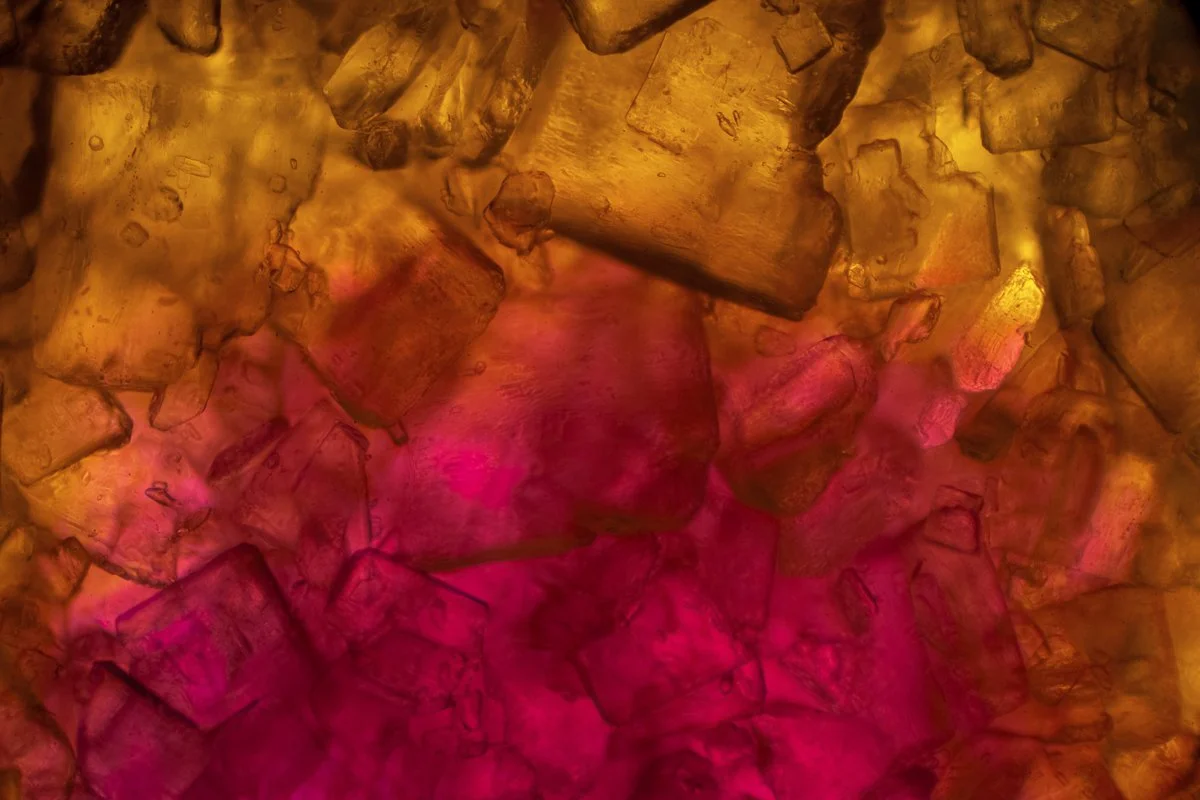
Pompeiin Colors
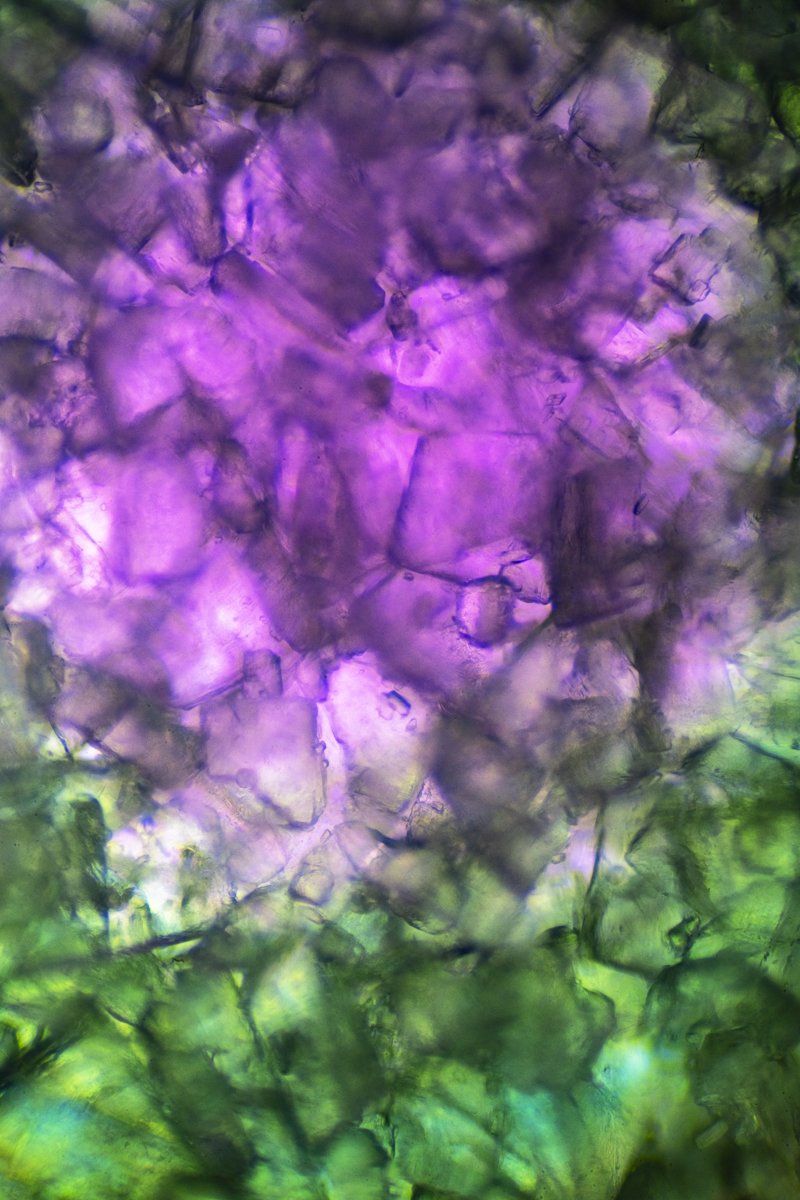
For the past two weeks, I’ve been taking care of my beloved dog who underwent surgery to remove a large hepatocellular tumor from his abdomen. I’ve been confined to one floor with him and decided to get out my microscope and make some images, which I have not done in awhile. The image above is of citric acid crystals that were formed when I mixed the acid with water and alcohol. I used polarizing and colorful optical filters. The crystals are formed since the molecules attempt to bond together as the water evaporates. Though citric acid is organic and not alive, it still made me think of building blocks and the creation of new structures and how everything has an innate motivation to connect. The color combination in the photograph above made me think of the pictures of frescoes from Pompeii. How fortunate we are that ash preserved archeological records from so long ago.
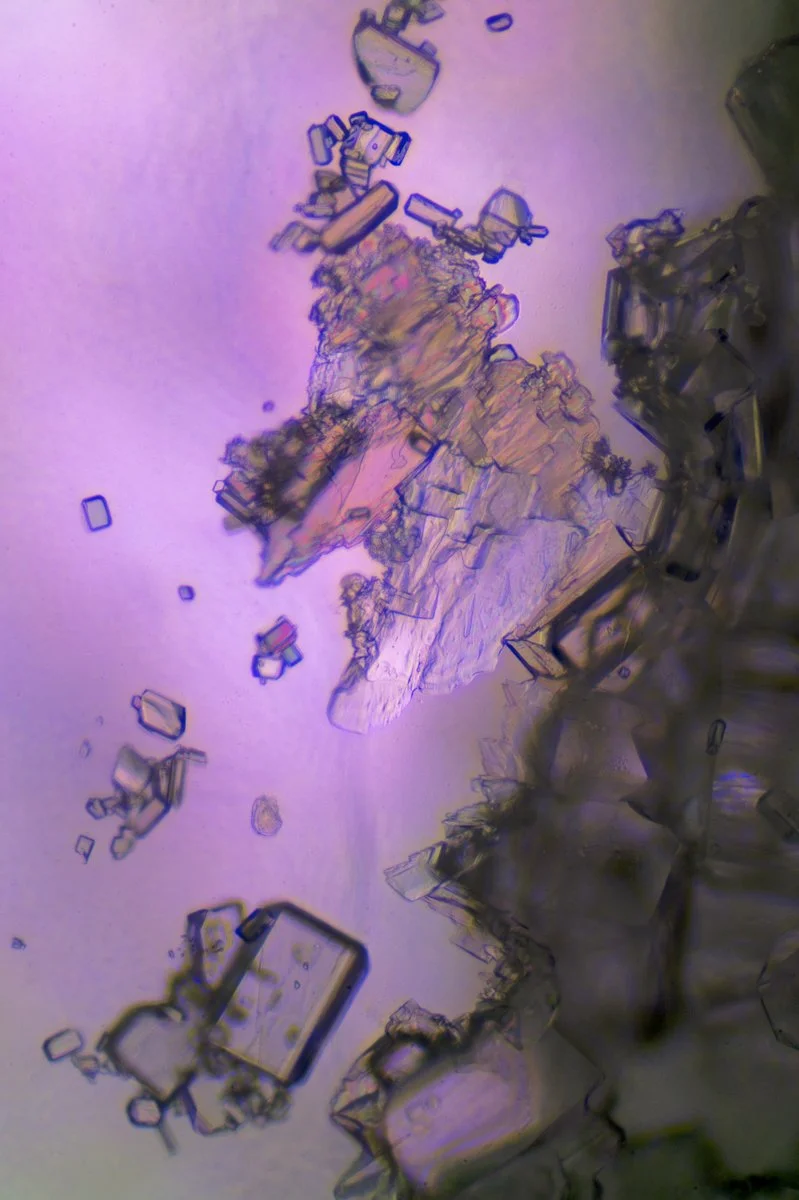
The image on the left is also of citric acid. It is made up of ten tacked photos. I didn’t want to do more, since I wanted the area on the right to look amorphous. It felt like the shapes on the left were emerging from chaos. Order and chaos are two themes I always return to, since I know without chaos there would be no new life or creative thoughts.
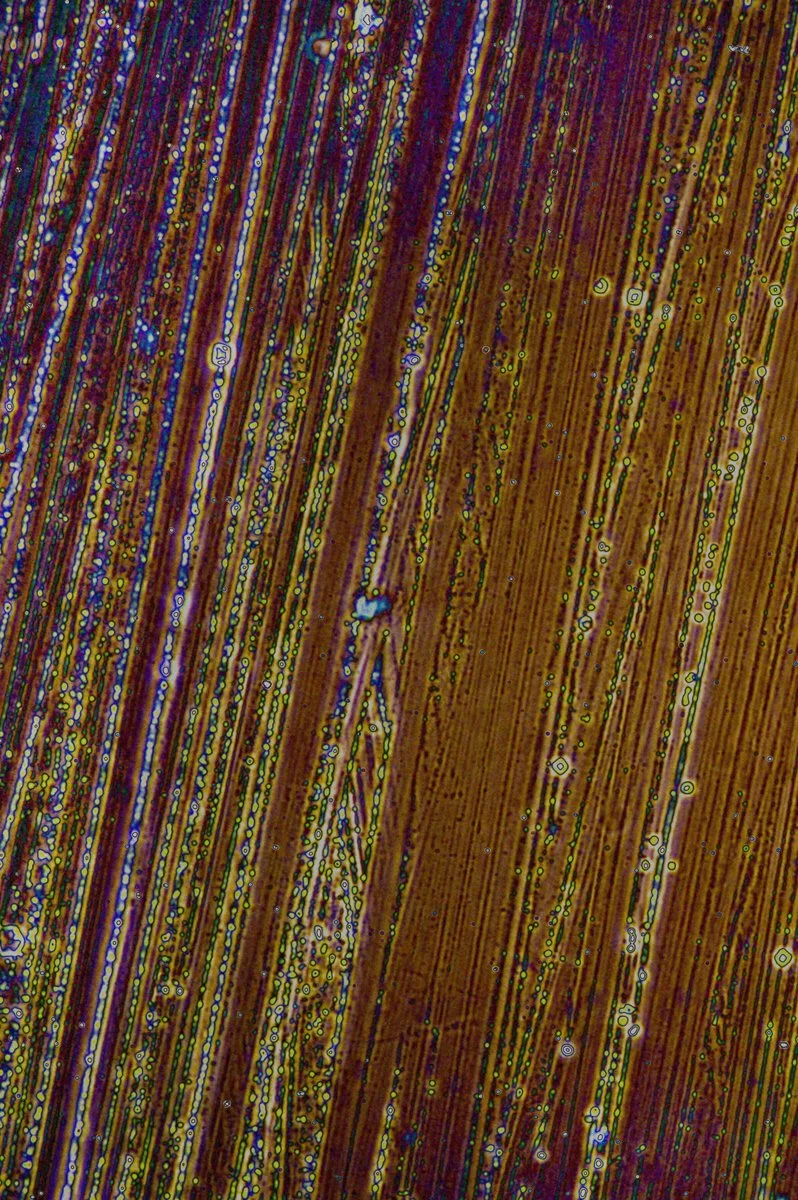
The image on the right is of the dense woody tissue of a mature pine tree. While I was looking through the microscope and working on it in post processing, I was able to accentuate the jewel-like quality of tree rings’ cell structure. I thought about how grateful I am for old mother trees and the information they pass down and share with new growth. Learning from ancestors helps all lifeforms become more resilient. I fear the historical amnesia many today are suffering from is wasting time, since we have to relearn the issues and responses instead of moving forward with solutions.
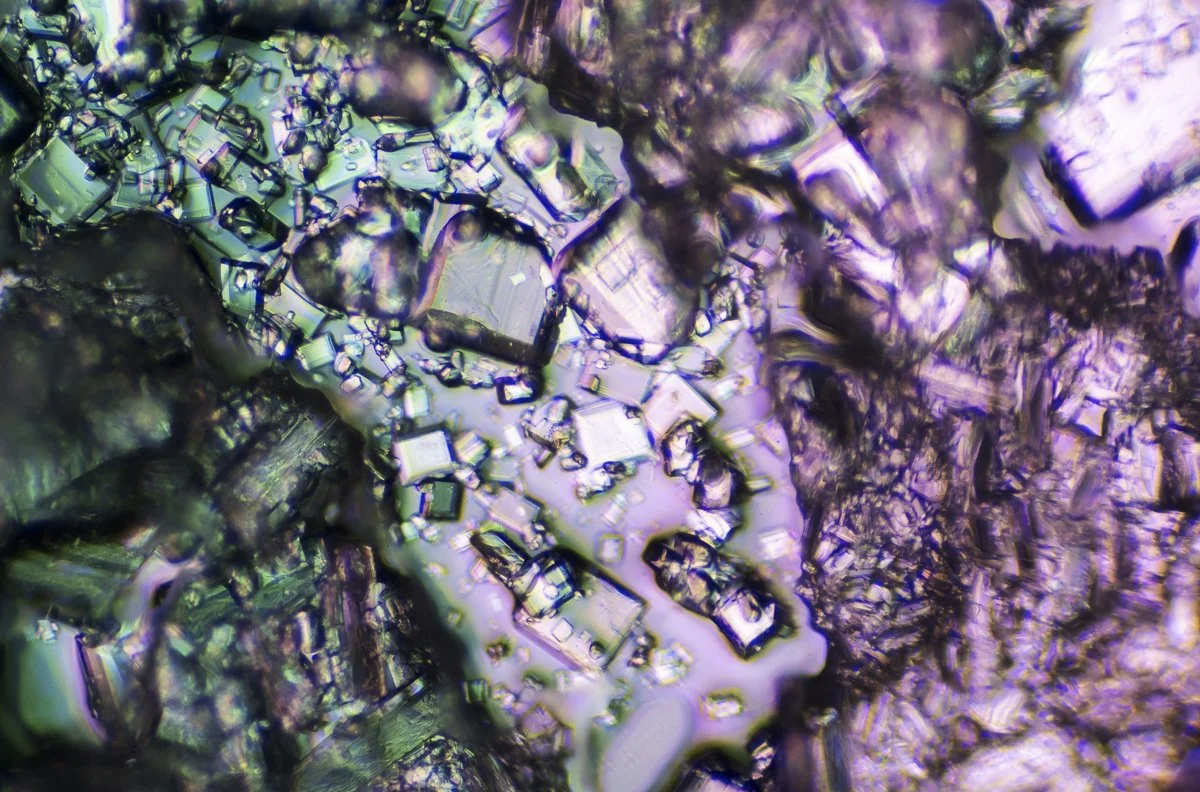
Before I leave the citric acid crystals, I want to share a couple more. It was so fascinating to watch them shift and form, as I zoomed in and out with the focusing knobs. It is so easy to get lost in this world and it always makes me realize just how little we perceive of what is actually going on around us. The image on the left made me think of a lost city at the bottom of an ocean and the one on the right felt like how a flower might experience its own energy. You can tell I always loved inkblot tests!
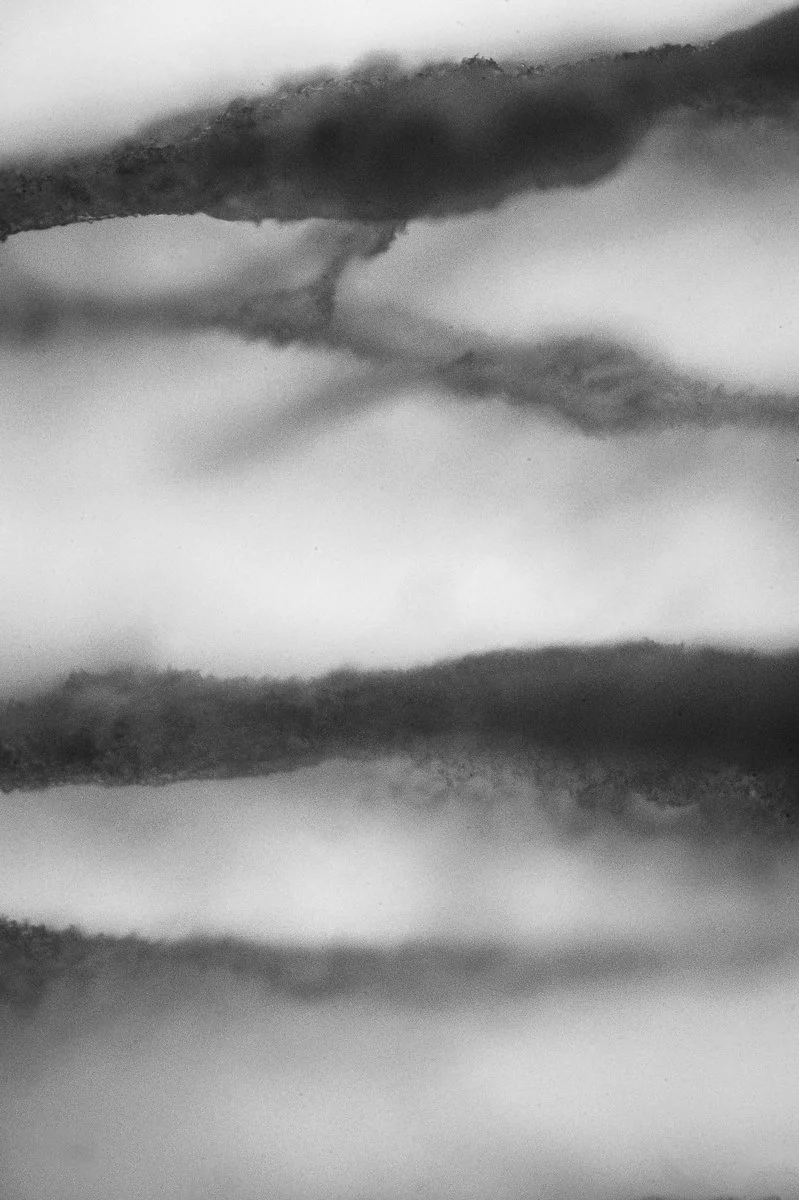
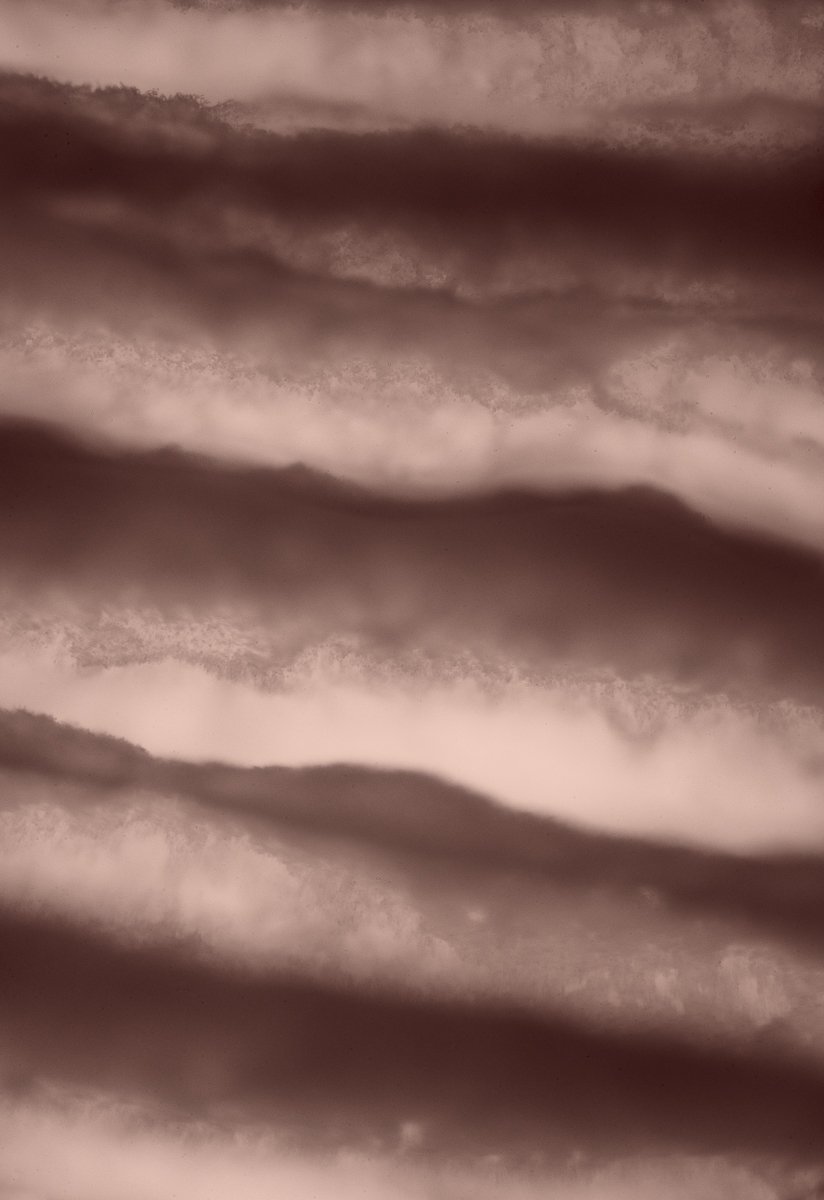
Fungi have always fascinated me, and they are so abundant right now with all the rain. The images above are of Shitake gills. They looked so ethereal to me. Recently, I saw de Kooning’s drawing exhibition at the Art Institute of Chicago (and I used to work for the gallery that represented him in NYC), and I was once again struck by how body parts can resemble landscapes. These fungi evoked both landscapes and flesh to me. Shitakes are decomposers, and by clearing away dead life, recycling it, and putting nutrients back into the soil, they are critical in helping new life emerge.
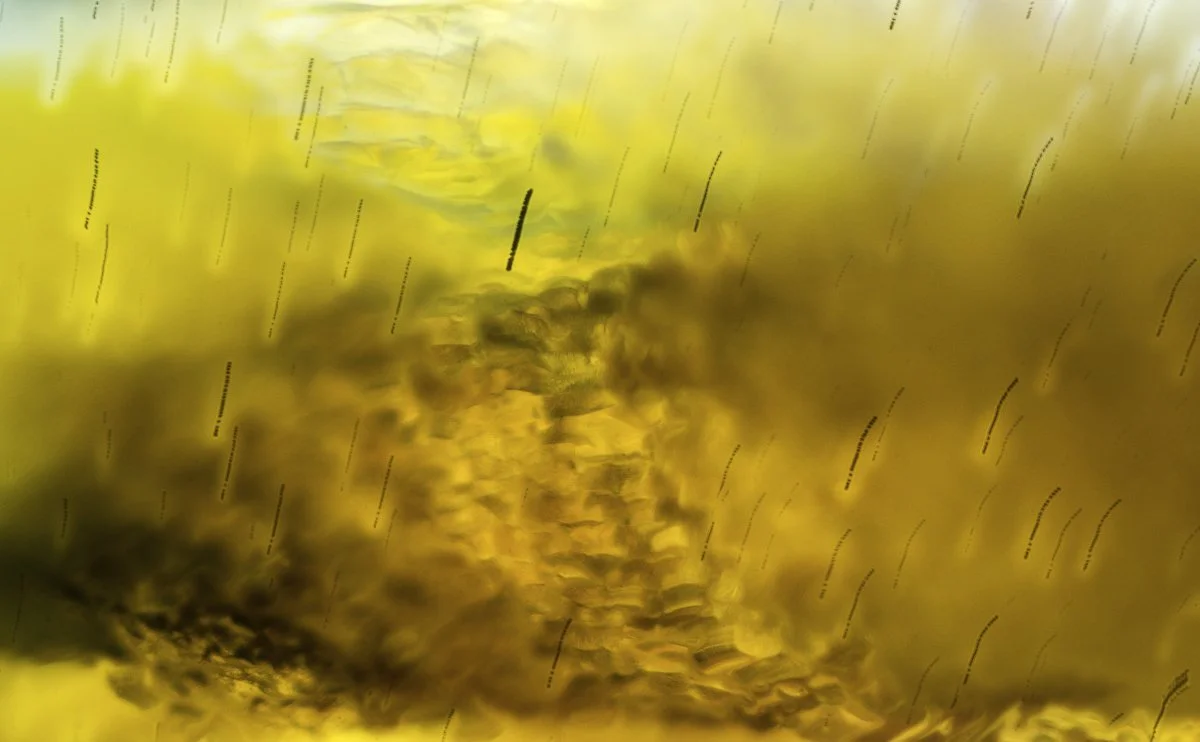
A Turneresque Interpretation of Pollen Raining within an Orchid Blossom
As I was playing and exploring new worlds, I started using the microscope more as an abstract art tool rather than stacking large numbers of photos together to create absolute clarity throughout the segment I was interested in compositionally. I loved the sense of movement in this photograph, as well as the atmospheric clouds and the haloes around the pollen as the cover slip pressed down on the small blossom. What I saw reminded me of a Turner painting. Pollen of course creates new life by carrying male DNA to female plants, so it is the foundation of so many important origin stories.
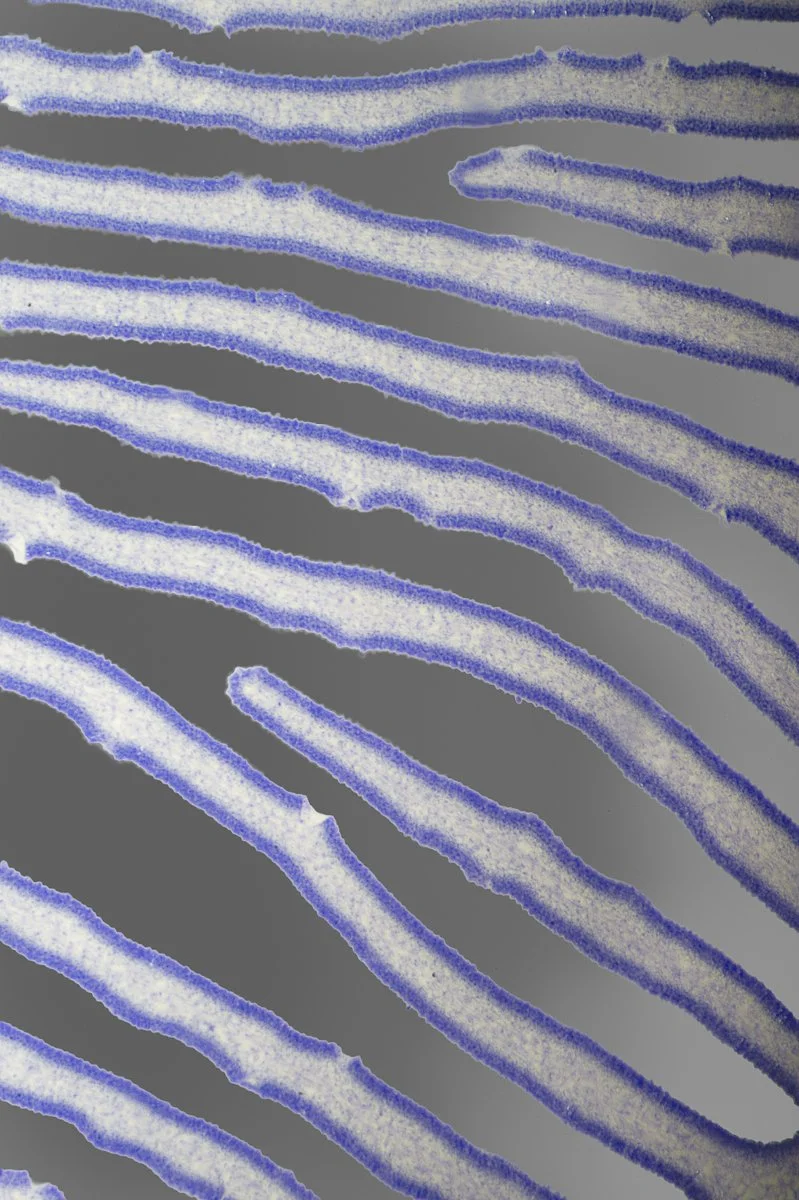
Once I start looking through my microscope, it’s hard to tear myself away. When I am walking in nature, I often gasp at something I find beautiful. Many times we take our surroundings for granted though, thinking what we see will still be there tomorrow. Of course it won’t, at least never in the same way because change is the only given–the differences are matters of degree. Looking through a microscope elicits lots of exclamations, at least for me, since I know without this tool none of what I am witnessing would be visible and therefore I wouldn’t even know it exists. The image on the left is the pattern of a cross section of coprinus mushroom’s gills with reproductive cells and spores. The gills release the spores and a single mushroom can produce billions. Although fungi were not the first lifeforms on Earth, they arrived over a billion years ago and the rock they broke down created the first primitive soils that helped transform the land into a habitable place for life. The first plants arose from the water and lacked roots, but the mycorrhizal networks created by fungi helped plants establish themselves on dry land. Fungi were also once one of the tallest lifeforms on Earth. Here’s a link to a fascinating episode of how fungi are responsible for life on land: https://www.cbc.ca/natureofthings/features/fungi-are-responsible-for-life-on-land-as-we-know-it.
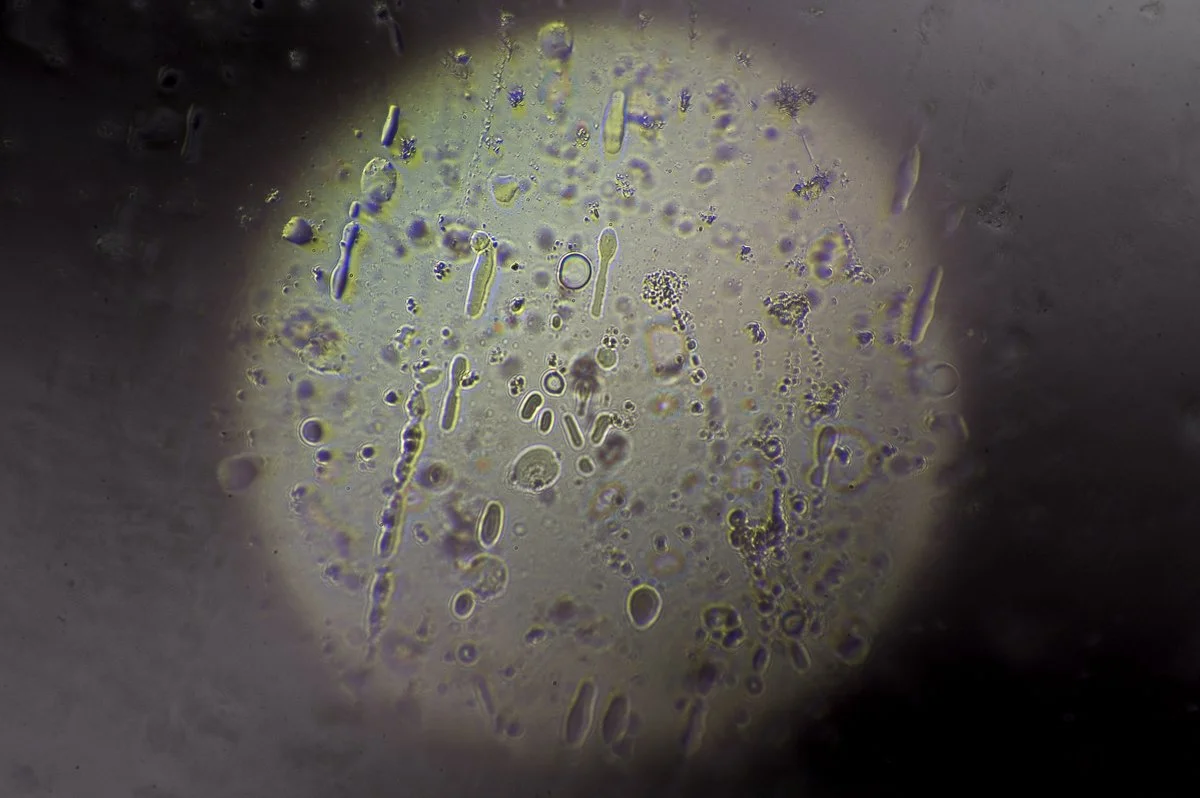
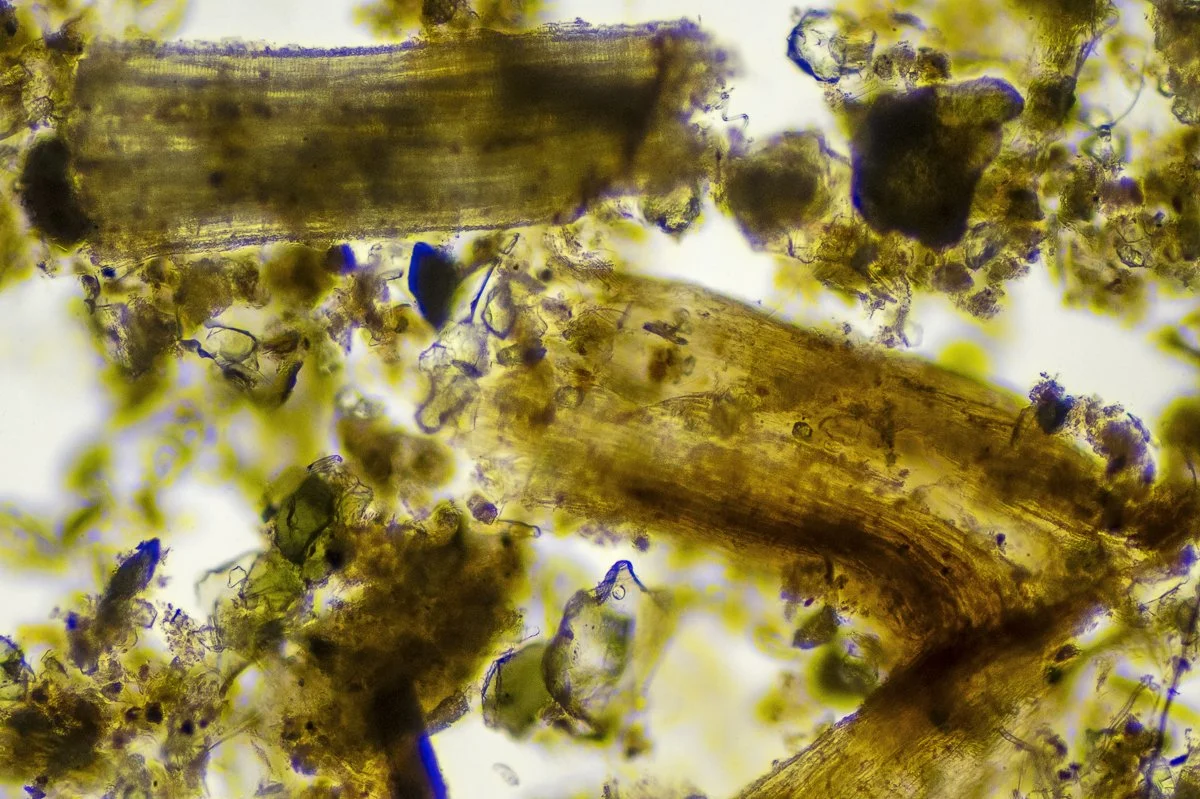
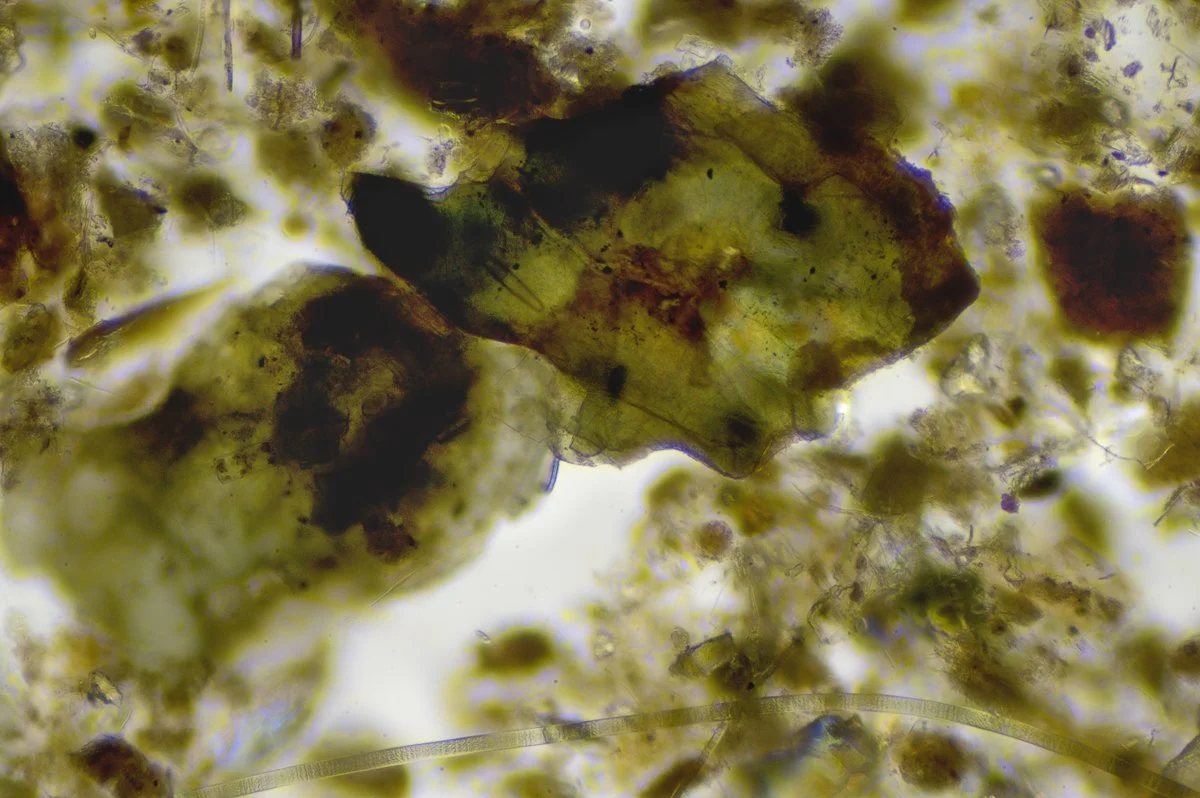
As I was unable to go out and forage myself, I gave my husband a jar and asked him to collect some water from a stagnant part of Curtis Creek near where he goes mountain biking in the Pisgah Forest. All three of the images below are from a single slide of that water. The images are single photographs, since so many lifeforms were in motion. There were ameobas, egg cases, cyanobacteria, nematodes, paramecium, and many other organisms. I was shocked by how much was going on in one tiny slide. In the photograph below, you can see some cyanobacteria in the lower left corner. Personally, I have often been very wary of cyanobacteria, since I moved to North Carolina from Florida and the cyanobacteria blooms there were quite dangerous. In Florida, the cyanobacteria cells released toxins in the water when they broke down and died. Yet, just like much in life, cyanobacteria aren’t all good or all bad. Ancient cyanobacteria microbes generated oxygen, which was essential for the evolution of multicellular life. The oxygen they release forms the ozone layer, which protects us from ultraviolet radiation. In addition, they an are important food source for small aquatic animals and they are nitrogen fixers. They are turly some of the most interesting organisms to study. (https://pmc.ncbi.nlm.nih.gov/articles/PMC4882571/; https://ucmp.berkeley.edu/bacteria/cyanolh.html).
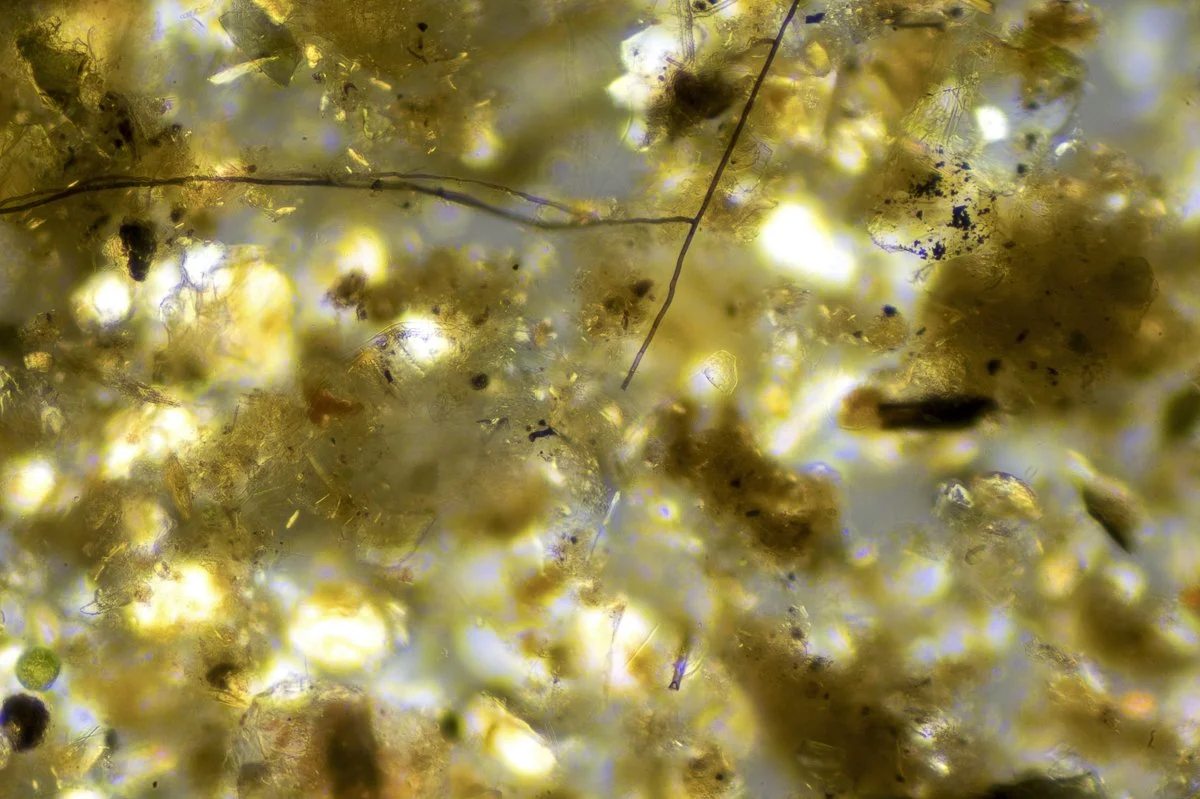
A Stick, Cyanobacteria, and a Myriad of Lifeforms, Curtis Creek
For days, I could not stop thinking about what I’d seen in these few tiny drops of creek water. When we view the world with our naked eyes only, it seems like there is so much space between things and we can envision ourselves as separate beings. Looking into this water, I could see how everything is connected and how there is a constant dance between survival and death, from the chaotic state of potential life to actualized beings and back to decomposition. It made me think that what we are living through now reflects how we all also exist in a giant petri dish. On the microscopic and macroscopic levels, these same dances between life and death, darkness and light, chaos and form also exist, as does the need to acquire the resources lifeforms need to live. The only difference is that humans are the only greedy ones who attempt to accumulate way more than they need and thus throw nature’s equilibrium off balance. Sure squirrels acquire more acorns than they can eat in one sitting, but they only acquire what they might need in one season. They do not attempt to acquire so many that it puts the regeneration of oak trees in danger.
Though I went a little stir crazy inside with my sweet dog for two weeks, I was so grateful for the opportunity to play with my microscope again and to consider the passage of time, origins stories, evolution, and the interconnectedness of everything in novel ways. I will never cease to be in awe of how nature functions and I am certain that the lessons it can teach us are infinite.