
How Connecting with Objects and Ideas and Bringing them Into the World Offers Portals to Meaning
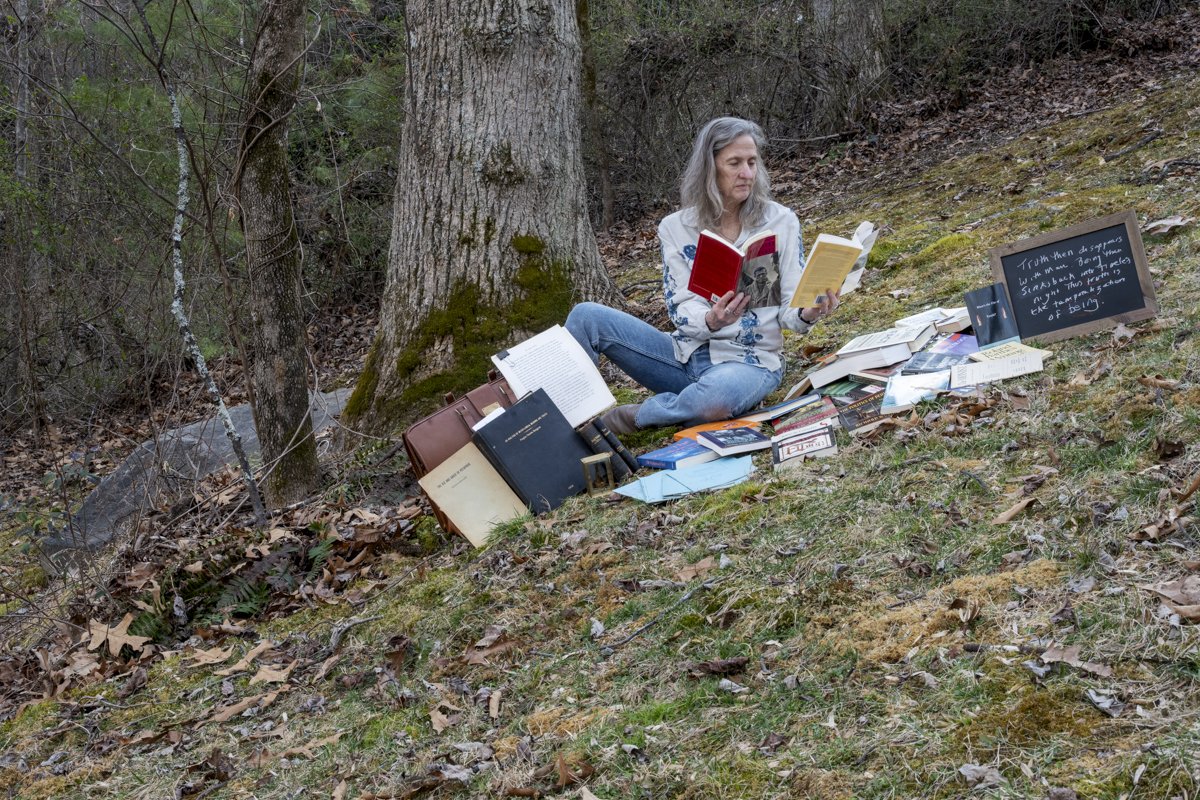
Truth is the Temporization of Being
It has been almost nine years since my father, Douglas Berggren, passed away. He had one of the most brilliant minds I have ever encountered. His 500-page PhD dissertation (the black tome in front of his briefcase) was entitled an Analysis of Metaphorical Meaning and Truth. (Yale subsequently passed a rule that dissertations could be no longer than 250 pages. I can image it was a lot for his dissertation committee to take in!) My father was incredibly rigorous in his thinking and looked at things from multiple viewpoints. When I was growing up, I typed pages of the book he would never publish. Every time, he would get to a point where his thinking changed and he realized that he had not in fact arrived at the “Truth.” I would get so upset that he was throwing the pages I had spent hours typing into the trash, and I could not figure out why he was so obsessed with identifying what truth was and how aghast he was when metaphors were taking literally. I used to think isn’t close enough good enough? Now I understand that he saw the current dangers we are facing years before many people recognized the path we are on.
I was raised on Heraclitus and his maxim that we can never walk in the same river twice, since the river is always changing and so are we. My father was also fond of Sartre’s quote “Truth is the temporization of being,” since he concurred that truth does not exist independently in the world but emerges through our consciousness, which exists as a synthesis of past, present and future states of being. Ultimately, my father decided there was no absolute truth, but he did not take that to mean that the quest for truth was a fruitless task and he believed in exercising critical thinking to determine whether something was more or less true . He thought Stephen Colbert’s coining of the word “ truthiness” was spot on and the article he saved about this word was still on his desk when he died.
Throughout my life, my father and I had profound philosophical discussions–especially when times were challenging. When the World Trade Center towers were bombed and I was living in Northern Westchester, we stayed on the phone for five hours, incredulous at what was happening and attempting to make sense of the tragedy. Once again we find ourselves in a fraught time, as we face the end stages of capitalism. The ground no longer feels stable and I find myself continually drawn to the books he was reading, his papers, even his blue books from school. Now that he is no longer hear to discuss current events and ideas with, I find myself perusing his books and papers in the hopes that I can glean some insights that might be helpful. The books in the photo above are just a smattering of all he read. Relaxation for him was reading the latest philosophical publication, whether it was similar or opposed to his own viewpoints. I know that I will never be able to fully grasp everything about his philosophical musings, but the quest, just like his quest for truth, is changing me and influencing my own thoughts about the world and our place in it.
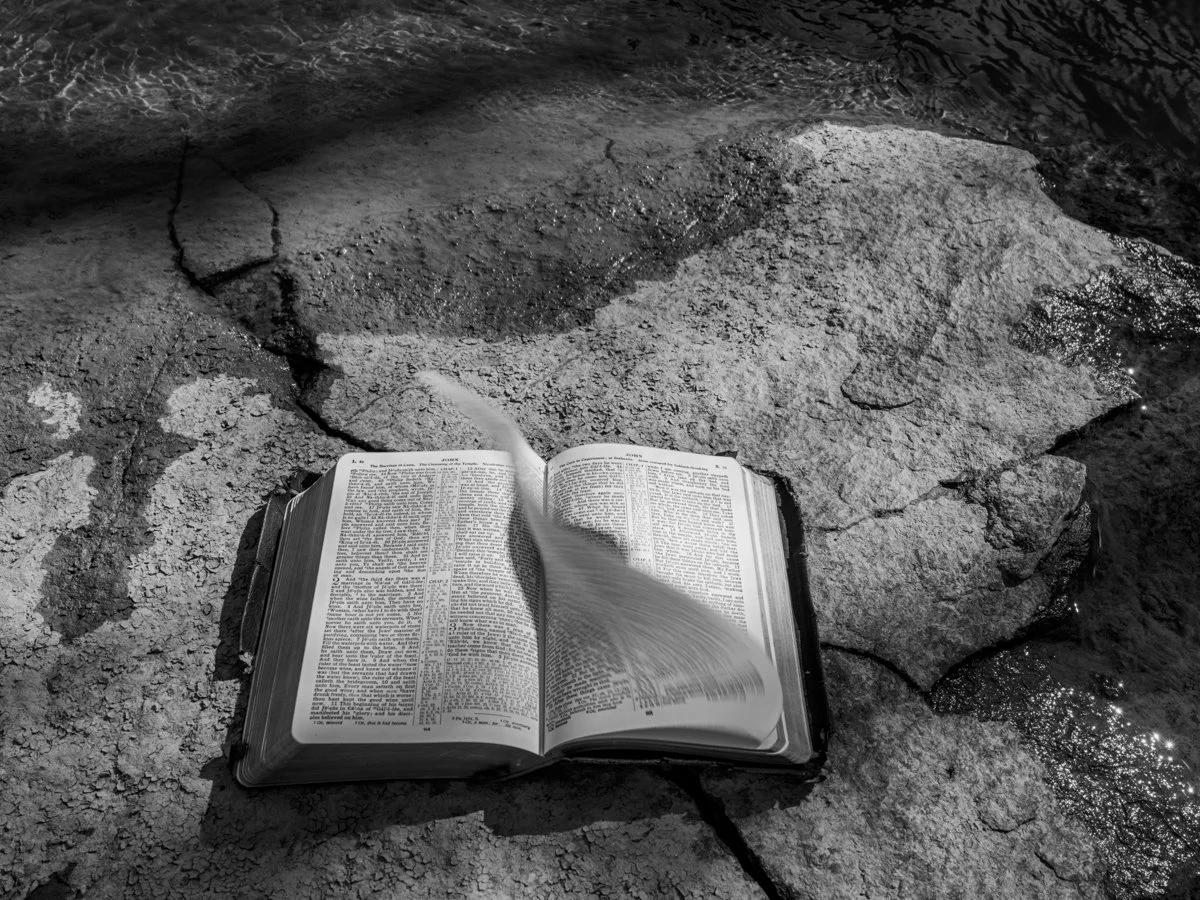
A passage from John 7:37 becoming manifest in the world
My father was orphaned at the age of 15. First his father died of pancreatitis when he was 9. Shortly thereafter, his mother was diagnosed with breast cancer which she battled for six years before succumbing to the disease. None of his aunts or uncles took him in, and his older brother had enlisted in the Army Air Corps, so the pastor of the Swedish Evangelical Church, William Thornberg, adopted him. This is the bible Reverend Thornberg gave him at the tine of his confirmation. In his dedication, Reverend Thornberg referenced John 7:37, which in this version claims that living water will flow from the heart of he who believes in the Holy Spirit. I took this antique Bible with me to a residency at the Wofford Environmental Center and photographed it at the Upper Shoals, where small rapids were flowing through a rock channel. I put the bible down on a rock by the water and a gust of wind blew and I had this feeling that words were coming off the page and into the world. Though my father became a philosopher and not a priest, it hit me that ideas and faith have a deeper meaning when we live according to the words we speak or tenets we espouse. The Swedish Evangelical Church is not like other Evangelical sects of religion. They believe that people need to establish their own personal relationships with God and that just quoting scripture or living according to some unquestioned creed does not make you truly devout. I also realized that the greatest tribute I could pay my father was to pay homage to his thoughts and bring them into the world.
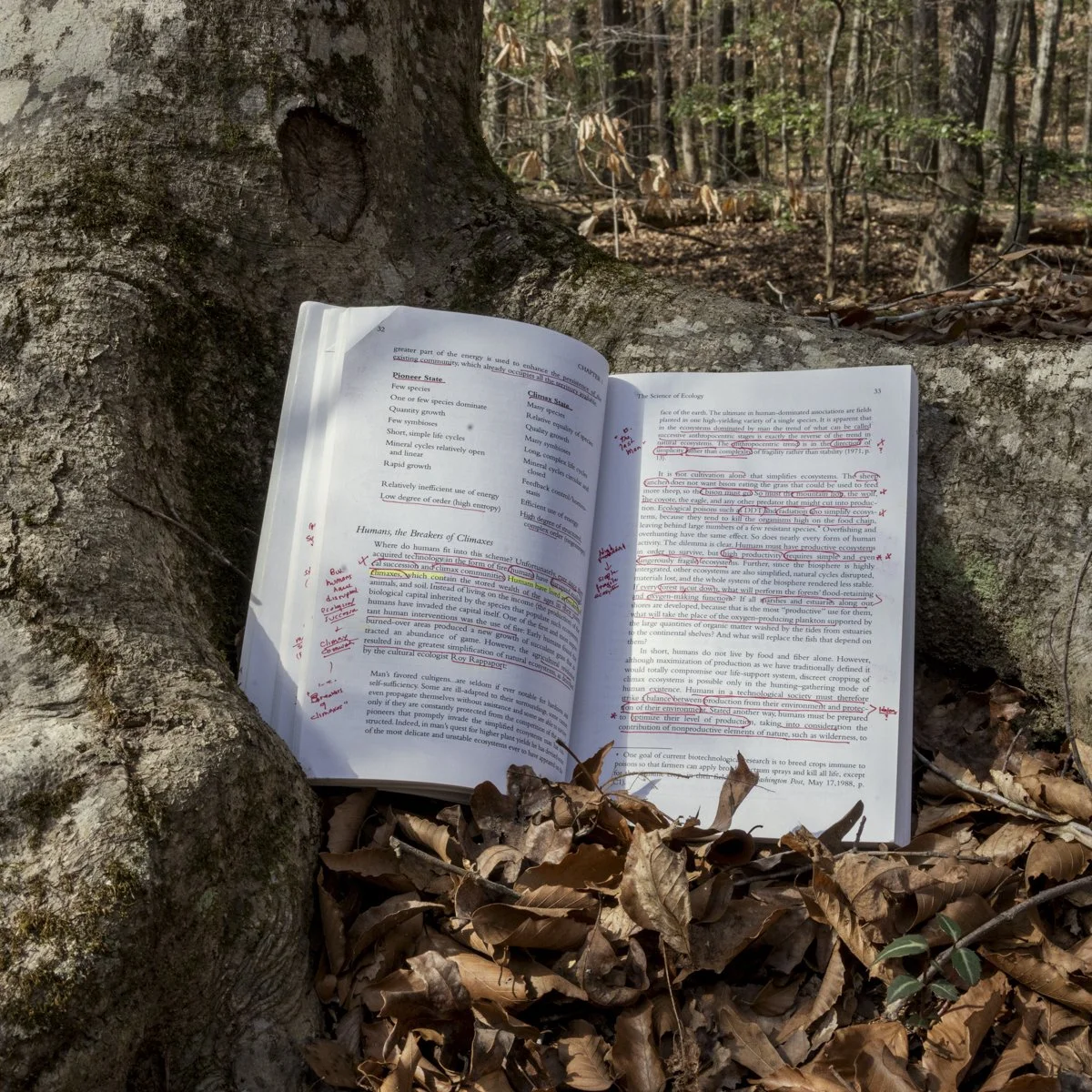
Humans the Breakers of Cllimaxes
Along with his bible, I brought some of his other books and objects with me to this residency. Besides courses on metaphor, aesthetics, ethics, and existentialism, he also taught courses on education, gender studies, and environmental ethics. The book in the photograph above is Ecology and the Politics of Scarcity Revisited: The Unraveling of the American Dream, published in 1992 by William Ophuls and A Stephen Boyan, Jr. The passages highlighted by my father pertain to how humans are the breakers of climaxes, or the wealth of the ages stored in plants, through human domination and the tendency to simplify ecosystems through cultivation, ecological poisons, clearcutting, and other actions that are designed with the aim of high productivity in mind. These actions are in fact diametrically opposed to the trend in natural ecosystems towards biodiversity and complexity. My father underlined, circled, and put an X and checkmarks by this sentence, “The maximization of productivity, as narrowly defined by economists, is eventually fatal for the system as a whole.” Reading this book in a natural setting beside a gently flowing stream in the Glendale Shoals Preserve made me ponder these ideas more deeply. The Glendale Nature Preserve, which connects with the Goodall Environmental Center, is rich in biodiversity, with mature forests, this beautiful stream, and a high bio-diversity area along Lawson’s Fork Creek.
Though my father taught environmental ethics and cared about how we interact with the natural world, he was more of an armchair thinker in his later years. When he began teaching and started a family, he stopped going in nature but his early cross country trips with his family and Carleton College mentor, Martin Eshleman, were ingrained in him and he understood both the value of nature in its own right and how linked we are with the natural world for our survival. The strong roots of this beautiful old elm seemed the perfect place to nestle this book, as I reflected on how my father has influenced my own approach to ecology and my photographic work. Unlike my father, I have spent countless hours in forests and along streams, and as our environment faces increasing dangers and we head towards a sixth extinction, it dawned on me that ideas may still be able to bring about change if they are brought into the world instead of existing solely in words and abstract thoughts.
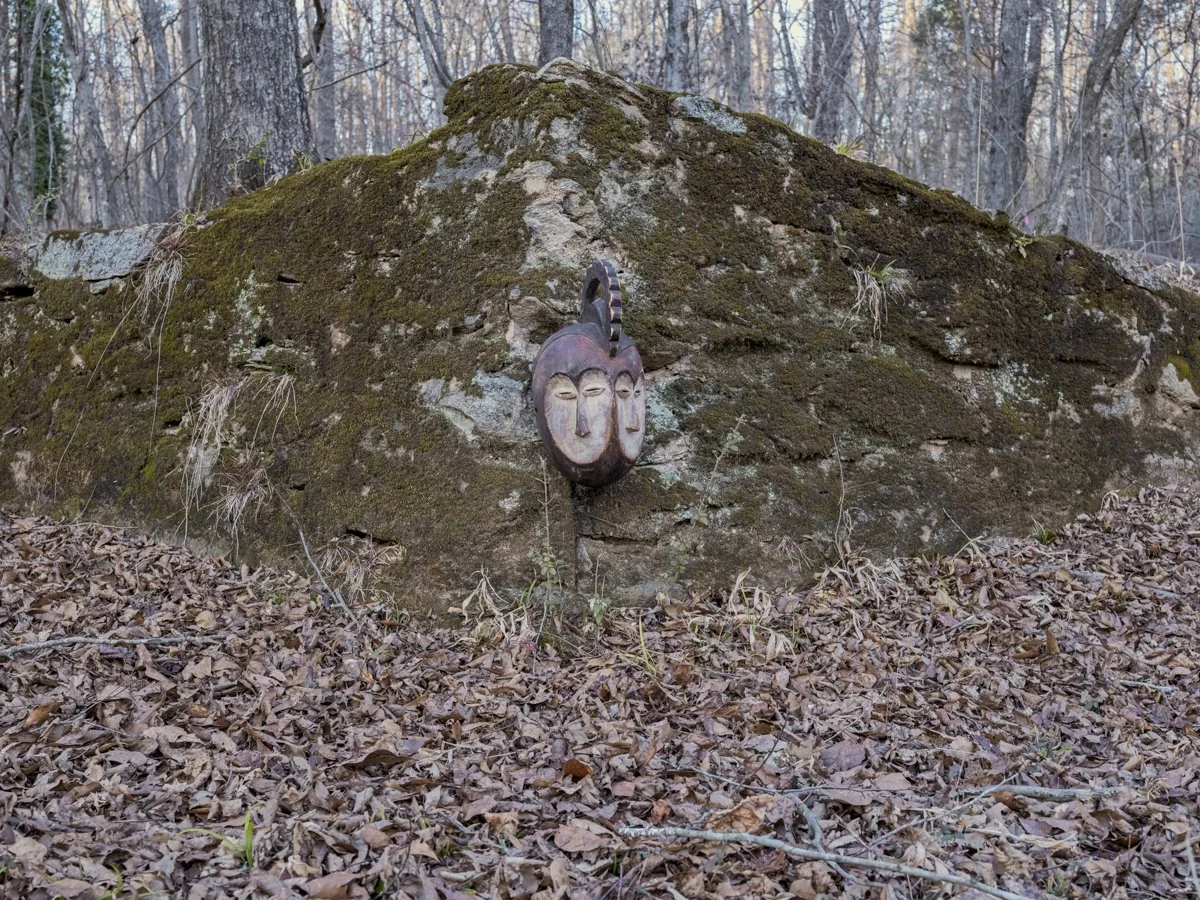
Janus on the Tramway Abutment, Looking to the Past and Future
The moss-covered stone structure in the photograph above is of an old abutment for the tramway that connected Spartanburg to Clifton. It began operating in 1900 and continued to service the area until the mid 1930s. It seemed like the perfect place for my Kwele Janus mask that I bought a year after my father died as a reminder of his philosophy. My father was obsessed with the Janus Paradox, and how life forces us to hold contradictory viewpoints and even truths at once. Ultimately, it led to his philosophy of the hyphen, which permeated all his thoughts on freedom and determinism, action and value, metaphorical meaning, being and becoming, even time itself. This site was perfect for this photograph and made the mask come alive for me. The Upper Shoals contains ruins of the tramway and a couple of houses, in a natural area where indigenous people came to trade. Later, a mill town was established nearby that produced cotton and munitions and is now an environmental center and preserve. The land here is so layered with history and meaning, as well as geology and hydrology, and it is also rich with flora and fauna. Being here for two weeks showed me how getting to know the land in an absolute way is as impossible as is finding absolute truth. Yet, empirical observations, listening to bird songs, experiencing the scent of wetlands, decomposing leaves, and biological processes, feeling the wind on my skin, and kayaking the stream all provided clues to understanding my place in a shifting world and it helped me feel more grounded. Reading books in the house where I stayed, going through the meticulously annotated pages in the herbarium, and talking with students and faculty helped me notice and experience things I might have missed, and I recognized how the past, present, and future all intersect here. But it didn’t end at the Goodall Center. Now anywhere I take a step, I wonder who the previous inhabitants were and what might happen to the area in the future. The land is the holder of memories and stories and a place where traces of our own existence may linger after we are gone.
Holding My Father’s Chalk
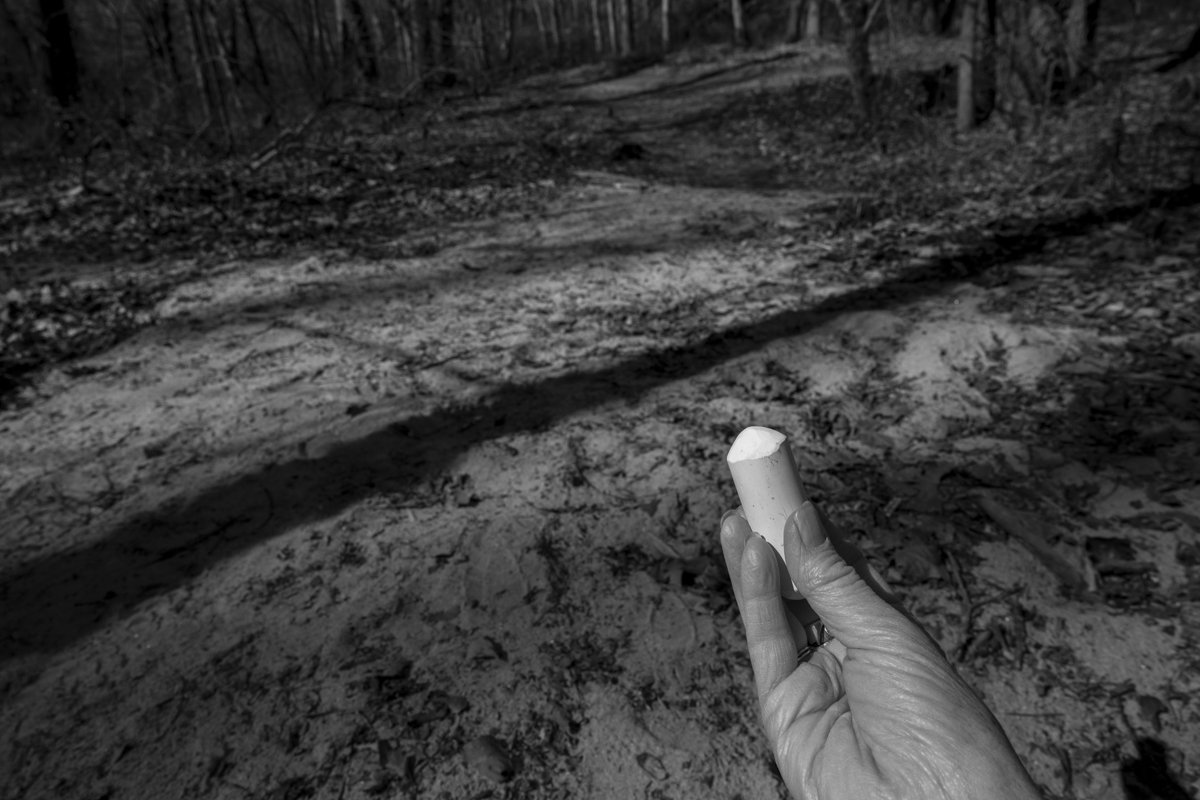
When I opened my father’s briefcase, a gift a gave him for his 60th birthday after his own had fallen apart from so many years of carting heavy tomes, I discovered two piece of chalk that he’d used to write with on New College’s blackboards. I brought the chalk to the Fern Cliff Area of the Glendale Nature Preserve in a ziplock bag. When I held the chalk in my hand and focused on the tip that had been created by months or maybe years of writing and turning the chalk in his hands, I felt as if I was holding a sacred object. A lifelong proponent of the Socratic method, he would write something, step back and ponder what he’d written, listen to the reactions of his students, consider another approach, turn the chalk, write again, and so on, as he demonstrated the virtues of an open mind and critical thinking. I wondered what he would be writing with it now? Was I up to bringing his message, or my own iteration of it based on my own life experiences, into the world? Picking up a piece of chalk, or a pen, can be a bold act and one that keeps us tethered to the world and the way we make meaning in it. Our thoughts may not always be correct, but if we keep turning the piece of chalk or pen and allow our perspectives to rotate we may be able to achieve greater understanding, become more empathetic, and make honest connections.
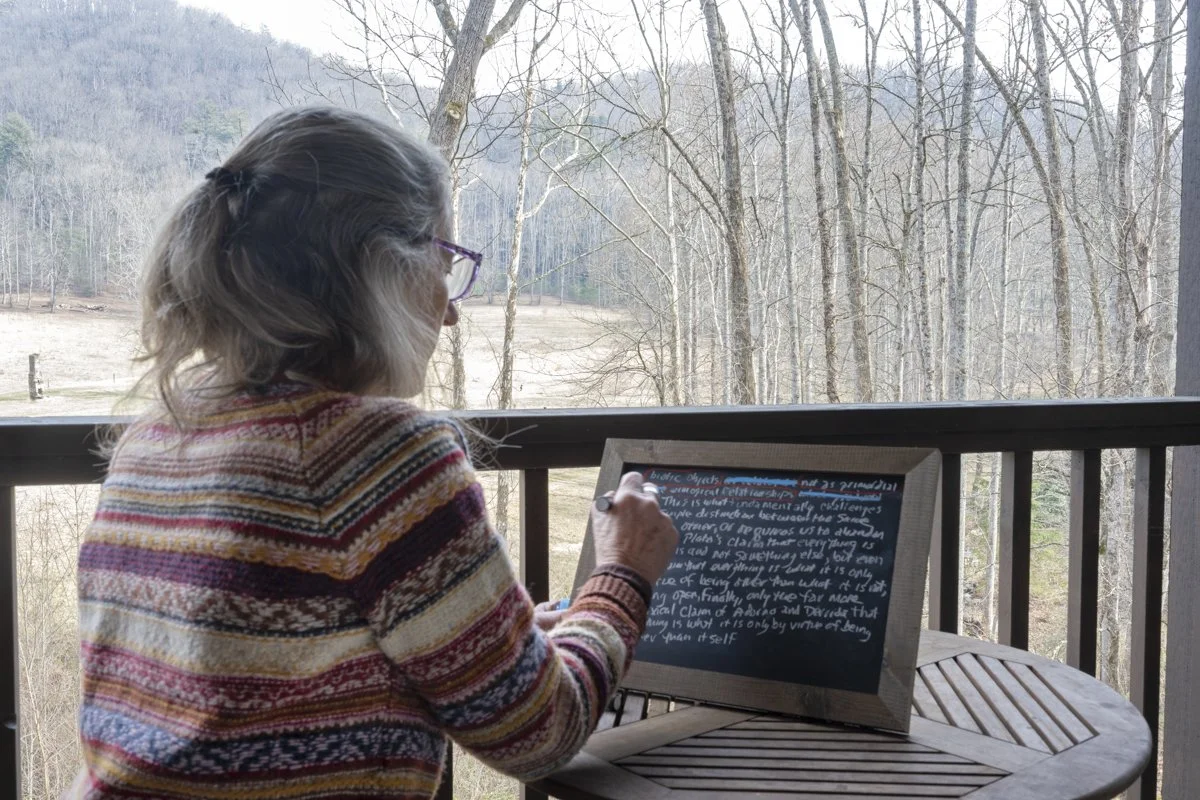
I have always learned by writing down salient points that I read or hear. In this photograph I am annotating one of the most profound quotes I found among my father’s papers. It is very applicable now, in this time of othering. He wrote that ontological relationship are more primordial than biotic objects, which I believe to be true. The interconnectedness of life never ceases to amaze me. The passage I copied down pertains to how we identify and understand the nature of our own being. Plato claimed that everything is what it is and is not something else. Hegel claimed everything is what it is only by virtue of being other than what it is not. Then Adorno and Derrida took that one step further and stated everything is what it is only by virtue of being other than itself, which expresses Derrida’s idea of “identity in difference.” In other words, identity is constantly shifting and can never be resolved and traces of the other, or differences that define us, always exist within us. Though their claims are paradoxical, this idea can be traced back to the ancient concept of the Many in the One and the One in the Many. So many issues that we face today arise from division and othering people and natures and cultures, and also a false hierarchical conception of man’s position in relation to the rest of the natural world. I find it magical when I can cross a species barrier and connect with another creature, and one of the reasons I’ve loved traveling so much is being exposed to other cultures and experiencing what happens when I can let go of my habitual patterns of perception and experience the world in a new way.

What is Philosophy and the Future of Freedom
I made this fractal to convey how overwhelmed I sometimes feel attempting to understand all the complexities of my father’s thoughts and life. He lost his father at 9 and was orphaned at 15. He could have been despondent, but he chose to find joy anyway. I discovered this about him when I traveled to his high school and saw all the clippings of him as a cheerleader and member of the glee club, or starring in operas. Even as an adult he loved to play with my children and dance and his sense of humor was so droll and amusing. Despite the seriousness of all the subjects he devoted his life to and the ever elusive quest for truth, he enjoyed the moment. I remember seeing American Beauty with him and being blown away by his reaction. Even though he’d suffered such profound losses, he found the ending to be very uplifting and his interpretation may be something for us to take solace from as we ponder whether we are on the verge of another World War. I found a note in his papers to have me read this at his funeral, but unfortunately I did not find it until this past year. He wrote: “Lester’s post-mortem, postmodern recommendation is that we should all learn, in Emerson’s words, how to “skate on the surface” of things, without longing for any reassuring foundation above, behind, or beyond what the moment brings.” In another paper, he wrote that we should all lend a helping hand, even though it will never get any of us out of our ultimate predicament. It is connection, appreciating the moments we have, and thinking deeply about what we do have and can share that give our life meaning. I will never be able to fully comprehend the depths of his mind, but what I have read and the images I’ve seen in his archive have opened my mind and heart in the deepest way. I have come to realize that if each of us who were influenced by him carry one thought forward, the reverberations will bring more light into this increasingly dark world.
Letter to My Father
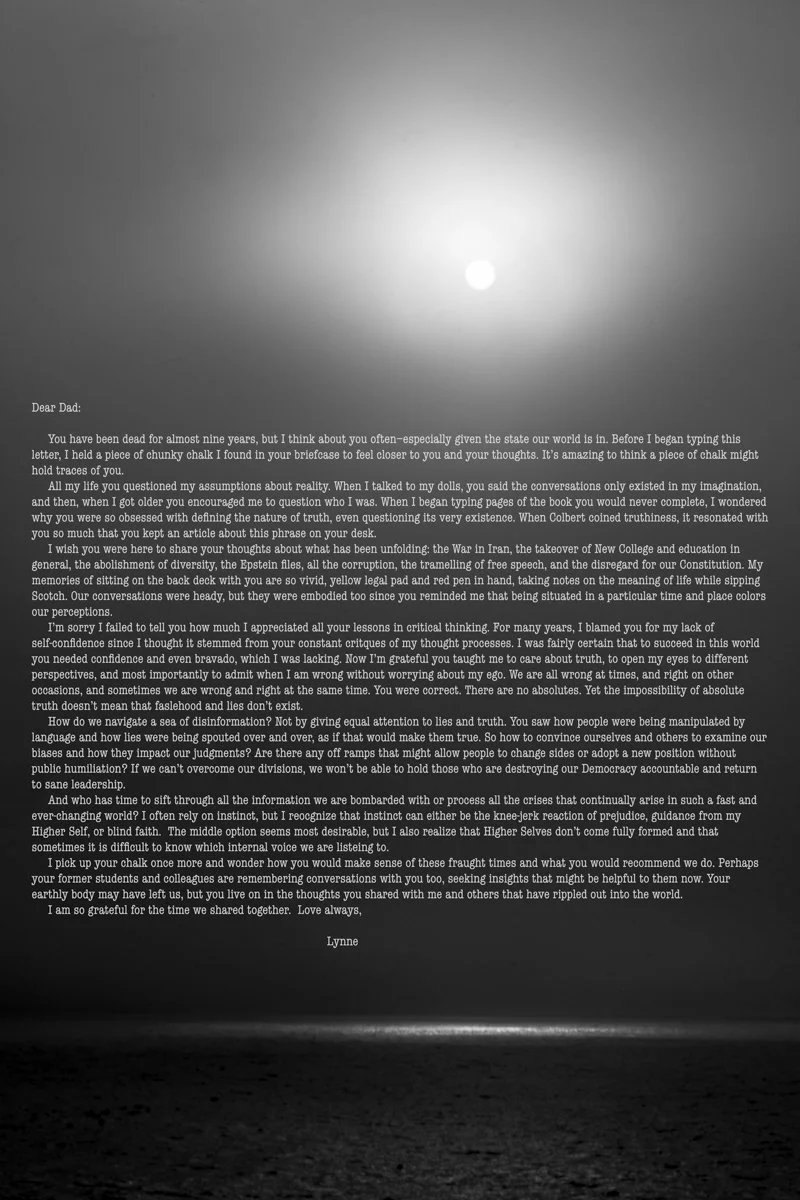
In closing, I will share this letter I wrote to my father, which I superimposed on an image I made on the coast of Maine last fall. It was a very cloudy morning, and suddenly the sun broke through and cast this glimmer of light on the water. The glimmer made me realize that even in the most challenging times, the light is not entirely extinguished and the possibility remains that brighter days may follow and in the meantime, we can cherish our memories of deep connections we have forged.